Michelle is a writer, editor, and attorney. Her fiction has been awarded the Gulf Coast Prize, Columbia University SPA’s Gold Circle Award, and nominated for two Pushcart Prizes and Best of the Net. Michelle’s work is included in Black Warrior Review, Gulf Coast, The Forge Literary, Arts & Letters, Lunch Ticket, Consequence Forum, and others.

Michelle holds a BFA in Fiction Writing from Columbia College Chicago and a Juris Doctor. She is the Editor in Chief of House of Arcanum, a journal of curated fiction. Many of her stories have been finalists for various prizes (including the Wright Prize for literary military fiction) and her story collection was a finalist for the W.S. Porter Prize.

Michelle is also a combat veteran of the conflicts in Iraq and Afghanistan, former helicopter pilot, Bronze Star recipient, and mother of a child with severe disabilities—all of which inform her work.

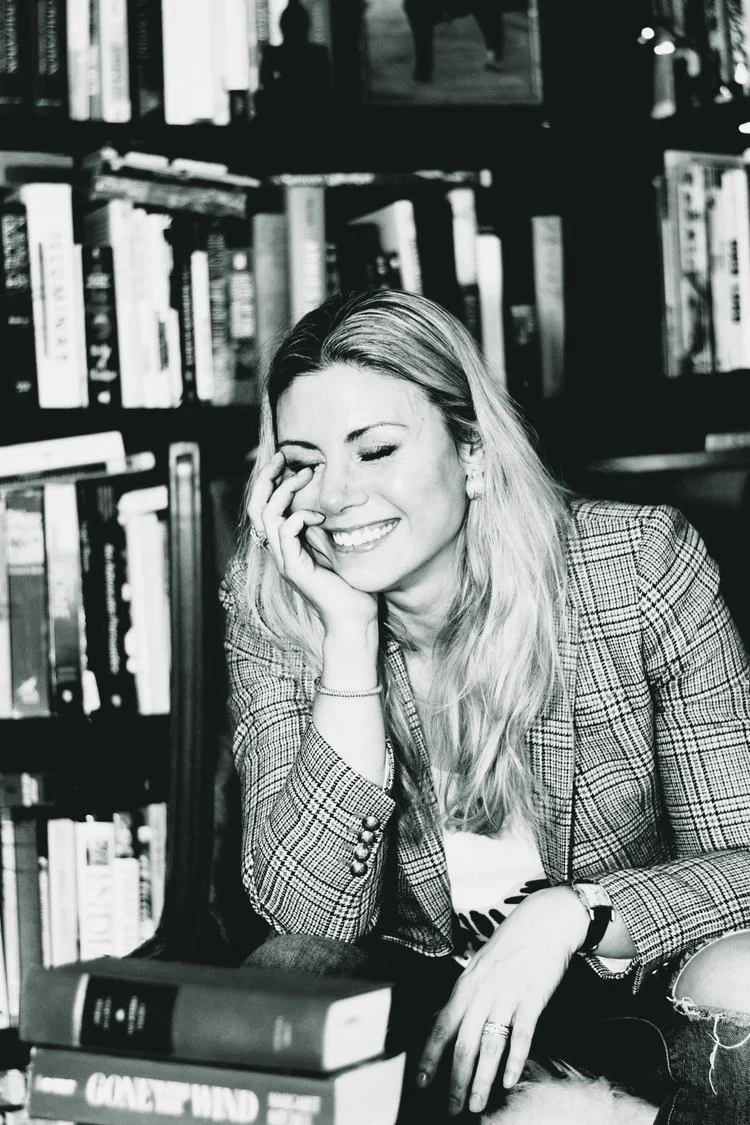
Black and white photo of a woman smiling and laughing in a bookstore, sitting in front of a bookshelf filled with books, wearing a plaid blazer and a watch.

Michelle is represented by Katie Grimm of Curtis Brown, Ltd.
Contact her at Hello@MichelleReneeBrady.com or through Curtis Brown, Ltd.

Advance praise for WHAT SURVIVES THE FIRE:

  • "A speculative ghost story, a slow-burn mystery of the ages, and a poignant character excavation all wrapped in one, [WHAT SURVIVES THE FIRE] is written with lyrical prose and a haunting metafiction-esque direction."

    —The Black List Reviewer

  • "Its account of womanhood, both under the blanket allegory of Persephone and Demeter and through the unflinching diving into the violence enacted on both Victoria and the women in her life, is layered and realistically tangled in a way that may resonate with various demographics of readers."

    —The Black List Reviewer

  • Six flying swans against a black background, depicted in various flight positions.

    "[T]here are doppelgangers, echoes of Rebecca in different women who are so beautiful that it becomes dangerous for them. These women are also different parts of Victoria, angles of the same face."

    —Ben Yeager, Editor of Wrath-Bearing Tree

  • "It's fucking brilliant, is what it is."

    —Sarah Starr Murphy, Managing Editor of The Forge

  • "The story masterfully employs the unreliable narrator trope, but it does so with such empathy that it feels less like a trick and more like a shared journey of discovery. The final reveal about Rebecca is one of the best uses of this I have ever read."

    -Anonymous Reviewer Three

  • Close-up of a person's face with closed eye and flowing hair, with spider web strands in the foreground on a dark background.

    "The commentary about womanhood and abuse in a world that hungers for violence...is heartbreakingly portrayed. Here, the nonlinear structure of [WHAT SURVIVES THE FIRE] heightens the fragmented nature of the storytelling, adding impact in small, lethal doses."

    —The Black List Reviewer

  • "There is deep “interactivity” here, both in the metafiction and in the fractal and non-linear nature of the structure. There are jailers and jailed, animals both symbolic and preserved, various ways of being a captive...without even getting into the implications of war and morality..."

    —Ben Yeager, Editor of Wrath-Bearing Tree

  • "Here is another excellent ghost story, but this time, the haunting is the narrator’s past actions. The narrator’s matter-of-factness clobbered me, especially the lines: “I never knew his name, just his crime,” and “We could only see heat, so I didn't know what color his clothes were..." Oof."

    —Barbara Diggs, Author (in Mondettes)

  • "Tonally reminiscent of works like EVERYTHING I NEVER TOLD YOU, with the fraught thematic exploration of BETTY and THE WOMEN and the prose and style of DRIVE YOUR PLOW OVER THE BONES OF THE DEAD, [WHAT SURVIVES THE FIRE] is in some ways both an elegy and an ode."

    —The Black List Reviewer

  • Black and white photograph of a branch with leaves, photographed against a dark background.

    "...haunted and atmospheric, as intimate as it is strange."

    -Rachel Heng, in her remarks on Chapter One

  • "Thematically, the manuscript is resonant and powerful, with the allegory of Demeter and Persephone pairing well with the frayed, troubled familial dynamics explored in the story. In particular, the exploration of Victoria’s dynamic with her mother offers an emotional intensity and fluctuation—be it in the resentment or the subtle back-and-forths—that reads as grounded and all too real."

    —The Black List Reviewer

  • "It beautifully subverts the conventions of a typical 'missing person' mystery. I was expecting an external search for a girl, but the story turned inward, becoming a psychological quest for a hidden truth."

    -Anonymous Reviewer One

  • "There’s a lot here about safety, about home, about vulnerability and especially “care”—what it means to be vulnerable and taken care of, and to take care of something vulnerable in a chaotic and dangerous world which exploits that vulnerability."

    —Ben Yeager, Editor of Wrath-Bearing Tree

  • Black and white photo of a rural landscape with a small wooden barn, surrounded by fenced fields, and three horses grazing in the distance. Trees and hills are visible in the background.

    "A powerful coming-of-age story of a child struggling to understand what it means to survive in an unforgiving world..."

    -Rachel Heng, in her remarks on Chapter One

  • "[The phrase, 'dead things I gave birth to'] is also brilliant. It brings home the fact that the narrator and the ghost have an irrevocably intimate link despite not knowing each other. Describing his killing as a birth is a stunning, chilling truth."

    —Barbara Diggs, author (in Mondettes)

  • Black and white close-up of a single flower with long leaves and a dark center, surrounded by grass.

    "This is the story you don’t want to read but you know you must. It stays with you whether you want it to or not. Truth is like that—hard to digest but even harder to ignore."

    —Tracie Adams

  • "What a strong voice. There's the ring of truth to this, and it captures the inherent conflict in reconciling the killer with the killed in war really well."

    —Consequence Forum Reviewer  

  • "Motherhood (in all its iterations) is a natural concept to spring from that—as is “barrenness,” both in bodies and in landscapes—and what it means beyond the purely biological. This story is a trip to the attic, as well, a reckoning with boxes and the stories they contain, much of which have to do with male-made damage."

    —Ben Yeager, Editor of Wrath-Bearing Tree

  • A black and white photo of an old, abandoned house with boarded-up windows and overgrown vines on the walls, surrounded by leafless trees.

    "The examination of trauma response and the tenuous line of sanity soldiers have to walk in war was well done."

    —Consequence Forum Reviewer  

  • "[The] writing style is beautiful, brutal, and deeply immersive. It trusts the reader to follow its emotional logic, and the payoff is a story that feels less like it was read and more like it was lived."

    -Anonymous Reviewer Two

  • "Danger is all around, from the bottomless pond in the back of the house where decades ago, another girl went missing, to the leering farmer who cuts their corn. The reader feels acutely all the other ways in which they are at risk--their economic precarity, their position as women and girls--and the sense of foreboding in the very first lines slowly tightens its grip as the events unfold."

    -Rachel Heng, in her remarks on Chapter One

  • A dark, abandoned wooden house with boarded-up windows, situated in a grassy area with leafless trees surrounding it, under a night sky.

    "Wow! Powerful. Devastating. Extraordinary structure that creates a story that blows you away."

    —Evelyn Fletcher Symes

  • "The non-linear structure, jumping between past and present, is used to incredible effect, mimicking the fragmented nature of traumatic memory."

    -Anonymous Reviewer Two

Fiction
Law